


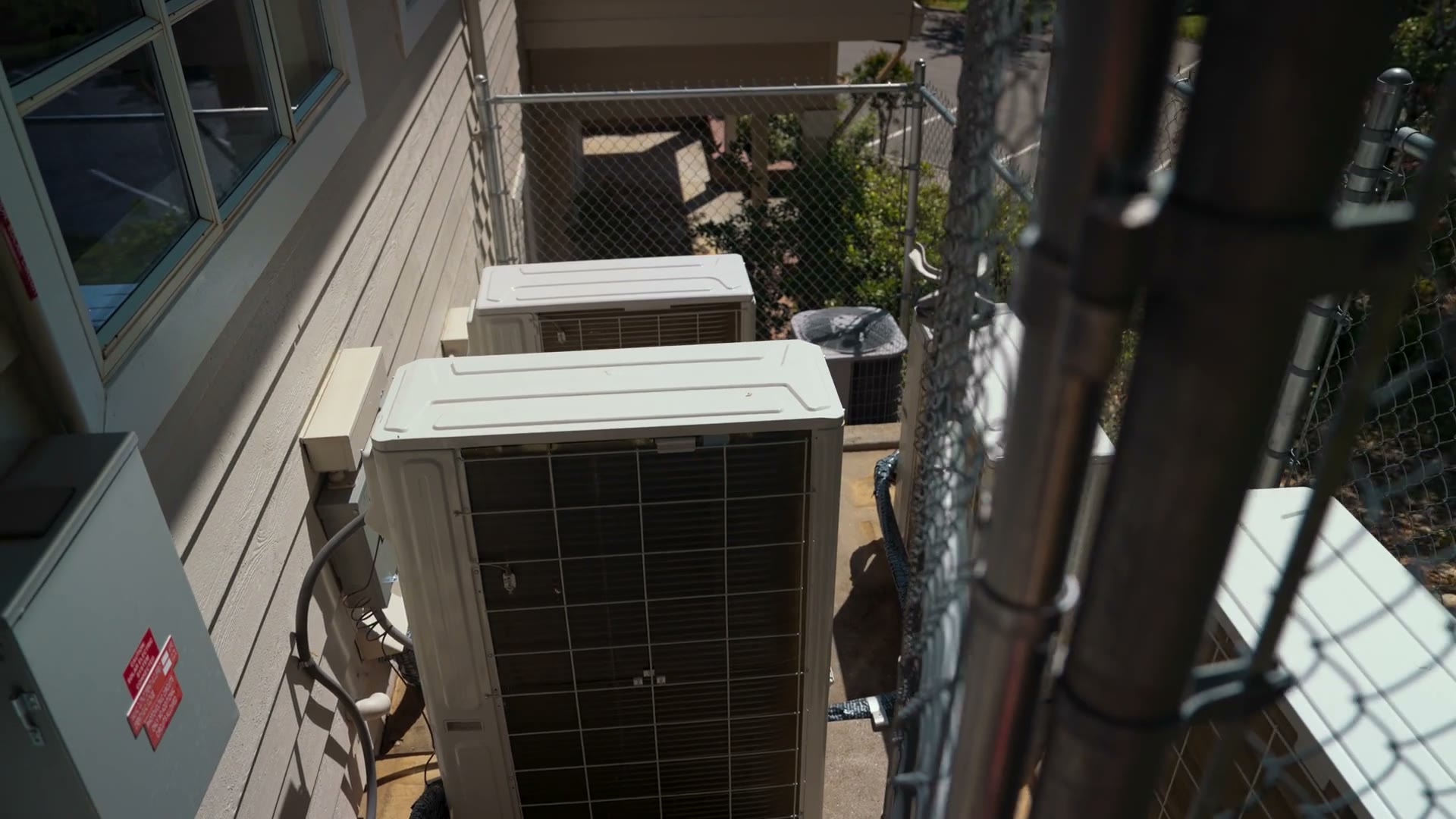
Why California HERS Testing Fails And How to Avoid an Expensive Re-Test
A failed HERS test is rarely about your equipment. It is almost always about how the system was installed and whether your contractor planned for the test from day one. HERS testing is third-party verification required under California Title 24 for most HVAC changeouts, and a fail means rework, a re-test fee, and a delayed final inspection. Here is why these tests fail in Nevada County and Placer County homes, and how to make sure yours passes the first time.
What a HERS Test Actually Checks
HERS stands for Home Energy Rating System. It is field verification performed by an independent, state-certified HERS rater who confirms your installed system matches what was modeled in the Title 24 paperwork. The rater does not work for your contractor. That independence is the point. Depending on your equipment, climate zone, and what was replaced, the rater verifies some combination of four things: duct leakage, refrigerant charge, airflow across the coil, and fan watt draw. The work flows through three forms: the CF-1R (the design), the CF-2R (what the installer measured and signed off), and the CF-3R (what the rater independently confirmed). A test fails when the rater's numbers do not match the standard the design promised.
Reason 1: Duct Leakage Over the Limit
Leaky ducts are the most common reason a HERS test fails in older Sierra foothill homes. The rater seals and pressurizes your duct system, then measures exactly how much air escapes. Homes around Grass Valley, Nevada City, and Penn Valley often have decades-old ductwork in crawl spaces and attics where connections have loosened over time. The usual culprits are unsealed boot-to-drywall gaps, flex duct that was never double-clamped, open seams at the air handler cabinet, and return leaks at framing. One detail trips up budget installers constantly: standard gray cloth duct tape is not code-legal on ducts. Only mastic or UL-listed foil tape passes. If your installer sealed with the wrong product, the rater flags it and you re-test. The fix is sealing the system correctly before the rater ever arrives. See our AC installation and furnace installation pages for how we handle ductwork.
Reason 2: Refrigerant Charge Off by a Hair
On air conditioners and heat pumps in certain climate zones, the rater verifies refrigerant charge. A system can cool your house and still fail this test. The rater attaches their own gauges and confirms the charge matches the manufacturer's specification within a tight tolerance, measuring superheat or subcooling depending on the metering device. Overcharged and undercharged systems both fail, and both quietly cost you in efficiency and equipment life. The failure almost always traces back to an installer who eyeballed the charge or skipped the measurement the CF-2R requires. A technician who charges by the numbers, then documents it, gives the rater nothing to flag. This is exactly what NATE-certified training is built to prevent, and our AC repair team handles charge verification the same way on every changeout.
Reason 3: Airflow Too Low and Fan Working Too Hard
Two related tests catch the same underlying problem: a duct system that cannot move enough air. For the airflow check, the rater measures actual delivery across the coil and compares it to the design value. A dirty or clogged filter is a frequent, avoidable cause, so the rater will have filters pulled before testing. The deeper cause is usually a restrictive or undersized duct system that no new furnace or condenser can fix on its own. The fan watt draw test measures how hard the blower works to move that air. A fan pulling too many watts per unit of airflow signals ducts that are fighting the system. When airflow fails, it is sometimes not the installer's fault at all. If the duct system was out of scope, the home may need duct upgrades to comply. The right move is catching this in the planning stage, before the equipment goes in, not after a failed test.
The Real Reason Most Tests Fail: No Plan for the Test
Step back and the pattern is clear. Duct leakage, charge, airflow, fan watt draw. Every common failure comes from the same root: a contractor who treated the HERS test as someone else's problem. The systems that pass are designed and installed with the test in mind. Ducts sealed with the right materials. Charge measured and recorded, not guessed. Duct capacity checked against the equipment before anything is bolted in. The installer fills out the CF-2R honestly so the rater's CF-3R lines up. A cheap install that ignores all of this is not a bargain. It is a re-test fee, a second visit, and weeks added to your final inspection. The way to avoid a failed HERS test is to hire the kind of contractor who never lets one happen.
What Happens If You Still Fail
A failed test is not the end of the project, but it costs time and money. Usually the contractor corrects the issue, then the rater returns and re-tests, and you pay for that second visit. In some cases the answer is on paper rather than in the field: if installed conditions differ from the original design, the Title 24 energy model can sometimes be updated to reflect real field conditions, which can resolve a borderline result without tearing anything apart. A good contractor knows which path applies and handles the coordination with the rater for you.
- Field fix: seal ducts, correct charge, or improve airflow, then re-test.
- Paper fix: update the Title 24 report to match verified field conditions where allowed.
- Either way: you should not be left chasing the rater yourself.
Related: HERS testing requirements, HERS testing and project delays, AC installation.
Frequently asked
What is a HERS test in California?
A HERS (Home Energy Rating System) test is third-party field verification required under California Title 24 for many HVAC changeouts. A state-certified, independent rater confirms your installed system meets the energy standard the design promised, checking items like duct leakage, refrigerant charge, airflow, and fan watt draw depending on your equipment and climate zone.
Why would my HVAC system fail a HERS test if it works fine?
A system can heat and cool your home and still fail. HERS testing measures efficiency and code compliance, not just whether the equipment runs. The most common failures are duct leakage over the limit, refrigerant charge outside the manufacturer's tolerance, low airflow, and a blower pulling too many watts. All of these come down to how the system was installed, not whether it turns on.
Does every HVAC installation need a HERS test?
Not every project triggers a HERS test, and not every test requires all four checks. What you need depends on the equipment installed, what was replaced, your climate zone, and other site factors. Refrigerant charge, airflow, and fan watt draw requirements in particular vary by climate zone. A qualified contractor confirms which tests apply before the work starts.
How can I avoid a failed HERS test?
Hire a contractor who plans for the test from the start. That means sealing ducts with mastic or UL-listed foil tape instead of cloth tape, measuring and documenting refrigerant charge, and checking duct capacity against the new equipment before installation. When the install is done right and the paperwork is honest, the rater has nothing to flag.
What happens if my HERS test fails?
The contractor corrects the issue and the rater re-tests, which usually means a second visit and a re-test fee. In some cases the Title 24 energy model can be updated to reflect verified field conditions, which can resolve a borderline result without additional fieldwork. A good contractor coordinates the re-test or paperwork for you rather than leaving you to chase the rater.
Does Brewer HVAC handle HERS testing in Nevada County?
Yes. Brewer HVAC has served Nevada County and Placer County since 1980, including Grass Valley, Nevada City, Penn Valley, Auburn, Colfax, Truckee, and Tahoe City. We install systems with the HERS test in mind and coordinate with the independent rater so your changeout passes and clears final inspection. We are a Carrier Factory Authorized Dealer with NATE-certified technicians, CA Contractors License #608848.