
Furnace Repair When the Heat Goes Out
A failed furnace at 28 degrees is an emergency, especially with kids or older folks in the house. We run repair calls across Grass Valley, Nevada City, Penn Valley, Auburn, and the surrounding service area through the winter, with same-day appointments available for no-heat situations. Every service truck is stocked with the parts that fail most often on Nevada County systems.
What we handle
- Diagnostic visit with a written quote before any work begins
- Ignition system repair, hot surface igniters, flame sensors, control boards
- Blower motor replacement and bearing service
- Heat exchanger inspection (and an honest call when replacement is the right move)
- Gas valve, pressure switch, and limit switch service
- Thermostat troubleshooting and replacement
- Service on every major brand, not just systems we installed
Common signs you might need this
- Furnace running but not producing heat
- Furnace cycles on for a few minutes then shuts off (short-cycling)
- Loud bangs, scrapes, or rattles when the unit fires
- Yellow flame instead of blue (call us immediately, possible CO risk)
- Burning smell that does not go away after the first heat cycle of the season
- Furnace is over 15 years old and acting up
What a furnace repair call looks like
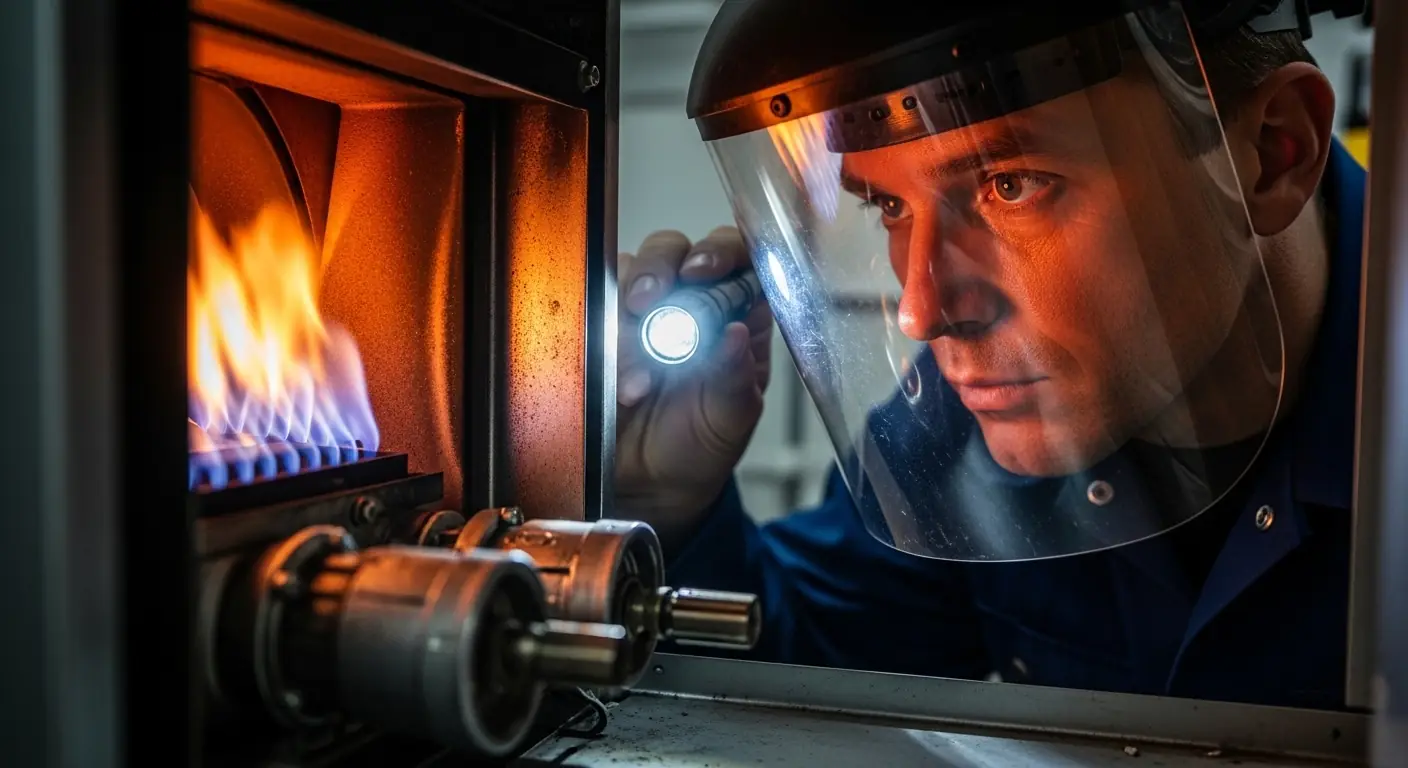
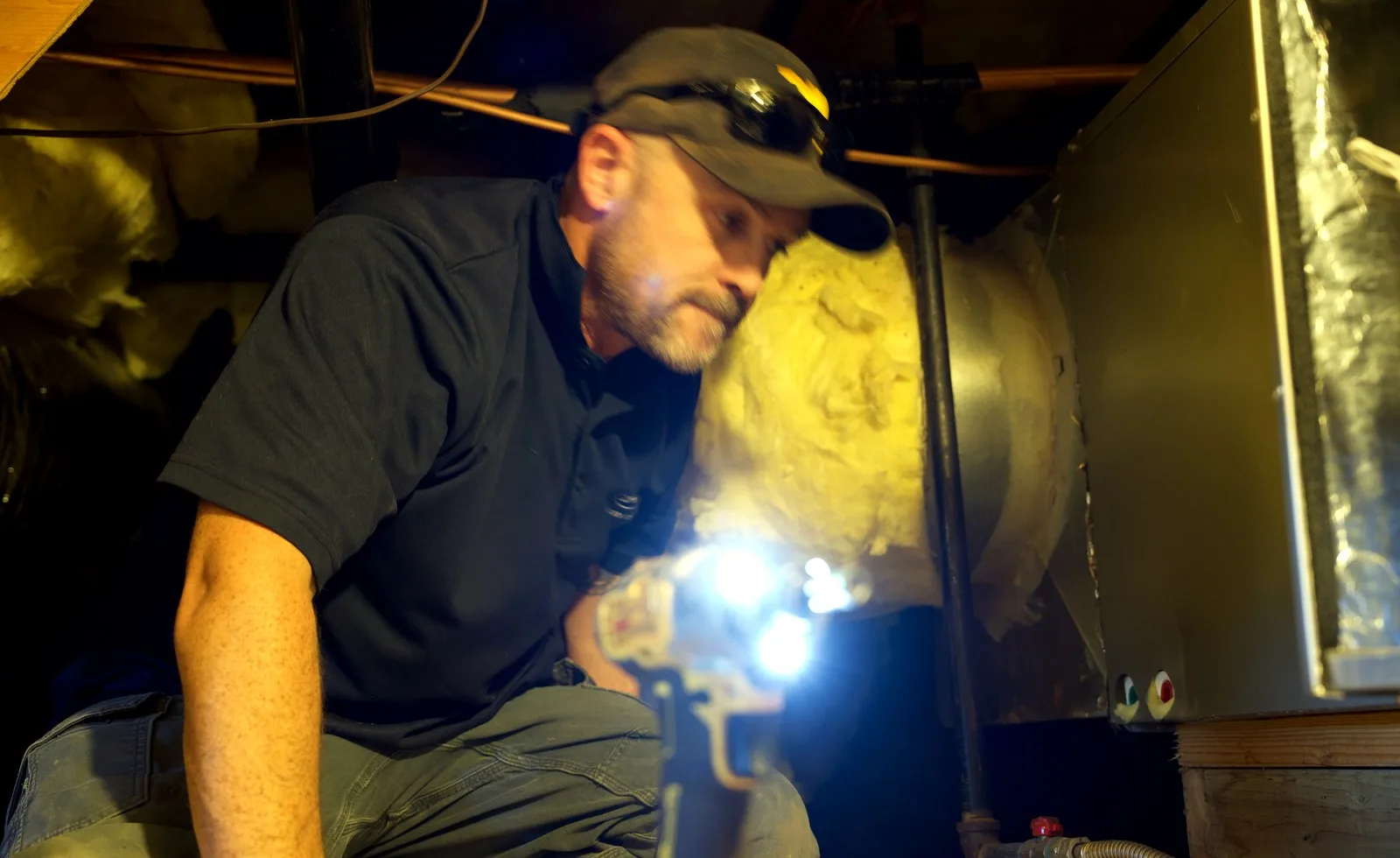
The technician arrives with a combustion analyzer, multimeter, and the most common failure parts for your system type. The visit starts with a safety scan, CO readings, flame color, heat exchanger integrity, before diagnosing the operational failure. You get a written quote before any work starts. There are no surprise charges.
Most furnace repairs in Nevada County are completed on the same visit: igniters, flame sensors, pressure switches, capacitors, and thermostats are standard stock on every Brewer truck. Larger parts like control boards and blower motors are usually sourced overnight and installed the next morning, so heat is restored quickly. If a repair reveals a cracked heat exchanger, a carbon monoxide safety issue, we stop the job, explain what we found, and walk you through replacement options. A cracked heat exchanger is not a repair we patch.
Common furnace problems in Nevada County
The most frequent repair we see is intermittent ignition failure, the furnace clicks to start, the flame sensor glows, but the unit shuts down after a few seconds. That is usually a cracked or contaminated flame sensor, an inexpensive part that takes twenty minutes to swap. Left alone it becomes a full no-heat situation on a cold November morning.
Second most common: a failing inducer motor. Inducer motors pull combustion gases out of the heat exchanger before the blower pushes warm air through the ducts. When they wear, typically around 12-15 years of age, they create pressure switch faults that most apps misdiagnose as a control board failure. We see misdiagnosed inducer failures regularly. The fix is the inducer assembly, not the board. Third: a failing heat exchanger. A crack or perforation allows combustion gases into the supply air stream, a CO risk. Symptoms include a soot smell from the registers, a tripped high-limit switch, or a yellow or flickering burner flame. This is a replacement situation.
Carbon monoxide and furnace safety
A properly functioning furnace burns natural gas cleanly, blue flame, complete combustion, CO vented safely to the exterior. A failing one does not. Cracked heat exchangers, blocked flue pipes, and improper gas pressure can all introduce carbon monoxide into your home's living space. CO is odorless and colorless; symptoms of low-level exposure include headache, nausea, and lightheadedness that clears up when you leave the house.
If your CO detector reads elevated levels, leave immediately and call 911. Do not re-enter until the fire department clears the space. Once safe, call us for a full diagnosis. We check the heat exchanger with a combustion analyzer, inspect the flue for blockages, and verify burner and gas pressure are within specification. Most CO risks in residential furnaces are detectable before they become acute, which is why annual maintenance matters. We see the problem before it becomes an emergency.
Why Brewer
Carrier Factory Authorized Dealer. NATE-certified technicians. Family-owned in Grass Valley since 1980. Licensed (CSLB #608848) and insured. We service every major brand, not just systems we install.
Need help deciding? Compare AC repair vs replace, heat pump vs furnace, or browse the HVAC guides before you book.
Frequently asked
My furnace just stopped, how fast can you come?
For no-heat calls in Grass Valley, Nevada City, and Auburn we usually offer same-day service if you call before mid-afternoon. Outlying mountain areas are typically next-day.
How much does a typical furnace repair cost?
It varies. A flame sensor cleaning is a low-cost service call; a blower motor or control board replacement costs more. We always provide a written estimate before any work, so you can choose.
Is it safe to keep running my furnace if it is making noise?
It depends on the noise. A louder-than-normal blower is usually fine until we get there. Banging, scraping, or anything combined with a yellow flame or unusual smell, turn the furnace off at the thermostat and call us. Carbon monoxide is a real risk.
Should I repair or replace an old furnace?
Quick rule: if the unit is over 15 years old and the repair quote is more than half the cost of a new high-efficiency furnace, replacement usually pencils out, both for cost certainty and energy savings.
What qualifies as a heating emergency?
Any no-heat situation with vulnerable occupants, elderly residents, young children, or medical equipment that requires a stable temperature. Also any furnace showing a yellow flame, unusual smell, or symptoms that could indicate carbon monoxide. In those cases turn the furnace off at the thermostat and call us. We prioritize no-heat calls during business hours.
Does furnace repair qualify for any tax credits?
Repairs alone do not qualify. But if the repair assessment determines the system is beyond reasonable repair and you replace it, a qualifying high-efficiency furnace can earn the federal 25C tax credit, up to $600 for a high-efficiency gas furnace, or up to $2,000 for a qualifying heat pump. We walk you through the math during the estimate.
Where we provide this service
We serve Nevada County and the surrounding foothills. Select your area for local details.